Cars from Korea: The Complete Guide
Guide · South Korea · Updated September 2026 · 12 min read
The Korean cars with the best price-to-condition ratio are sold in closed auctions, not on the retail sites foreigners browse. Buying one well takes three things: knowing which of the three market tiers you are buying from, accepting that a licensed member has to bid for you, and reading the condition grade according to the house that issued it.
This guide covers all three tiers, the four wholesale auction houses, how bidding works and a grade decoder. It ends with the two ways to buy a Korean car through us: yourself from an insurance auction, or already repaired in our workshop in Lithuania.
Three things to know
- Three tiers, three different products. Retail, corporate wholesale auctions and insurance salvage auctions sell different cars to different buyers. A tier-2 car is a normal used car; a tier-3 car is a damaged asset. Confusing them is the most common mistake.
- You cannot bid yourself, and the hammer is not the price. In every tier only licensed members bid. Commission, transport and tax sit on top of the hammer price, and title transfer depends on where the car came from.
- The grade depends on the auction house. Two characters and a body diagram describe a car better than any advert, but the same repair is W at Lotte and PP at Glovis. Read a code only once you know who issued it.
Korea's used-car market has three tiers, not one
Most people outside Korea only ever see the top tier. Understanding what sits beneath it is the single most useful thing to know about this market.
A local analogy: Seoul has the Garak wholesale produce market and the Noryangjin fish market. Consumers buy at retail; the actual price discovery happens at a wholesale layer they never visit. Used cars work the same way.
1. Retail
Where ordinary consumers buy. This tier is fully public and fully searchable.
- Online: SK Encar, KB Chachacha, Kcar's retail platform
- Offline: dealer complexes in Incheon, Bucheon, Gwangmyeong and similar districts
Prices here include the dealer's margin, reconditioning cost and warranty exposure. This is the tier that surfaces in a Google search for Korean used cars.
SK Encar · KB Chachacha · Kcar
2. Corporate wholesale auctions
Where dealers buy their stock. Four large auction houses operate physical auction halls, run their own inspection facilities and sell to registered trade members only.
Inventory is overwhelmingly ex-fleet: returned long-term rental cars, corporate and public-institution vehicles, demo and test-drive cars, and dealer trade-ins.
This is the tier this guide is mainly about, and the one that matters most to anyone sourcing normal, roadworthy vehicles at wholesale prices.
Lotte Auto Auction · Hyundai Glovis Auction · AutoHub · Kcar Auction
3. Insurance salvage auctions
Where damaged and total-loss vehicles are liquidated. An insurer that writes a vehicle off does not scrap it; it auctions the residual vehicle to recover value.
Sellers: Korea's major non-life insurers (Samsung Fire & Marine, Hyundai Marine & Fire, DB Insurance, KB Insurance, Meritz Fire & Marine and Hanwha General Insurance), plus loss-adjustment firms and large corporate fleets such as Lotte Rental, SK Rent-a-Car, Socar, Coupang and the National Rent-a-Car Mutual Aid Association.
Buyers: restricted to licensed vehicle dismantling and recycling operators (해체재활용업자, registered under Korea's auto dismantling and recycling framework) and licensed used-car export businesses. Again, not the general public.
Outcome: the vehicle is either dismantled domestically for parts, or exported.
Samsung Fire & Marine · Hyundai Marine & Fire · DB Insurance · KB Insurance · Meritz Fire · Hanwha General
Why the three-tier distinction matters. These tiers are not price levels of the same product. They are different products. A tier-2 car is a normal used car sold wholesale. A tier-3 car is a damaged asset sold for parts or export. Conflating them is the most common mistake foreign buyers make when they read about "Korean car auctions".
Four auction houses run the wholesale tier, each with its own schedule and inventory profile
Auctions run on fixed weekdays. The calendar barely changes outside major holidays, which means sourcing can be planned around it.
| Auction house | Location(s) | Auction day(s) | Typical inventory |
|---|---|---|---|
| Lotte Auto Auction | Anseong, Gyeonggi | Monday | 95%+ long-term rental returns from Lotte, Kumho and KT affiliates, corporates and public institutions; mostly ~3 years old |
| Hyundai Glovis Auction | Bundang, Sihwa, Incheon, Yangsan | Tue (Bundang), Wed (Sihwa/Incheon), Thu (Yangsan), Fri (Bundang/Sihwa) | Long-term rentals from Hyundai/Kia group affiliates, public bodies and corporates; cars sourced via new-car dealerships; wide model-year range including older cars and demo vehicles |
| AutoHub Auction (formerly AJ Sell-Car) | Anseong (Gongdo), Gyeonggi | Wednesday | Rental company fleet plus privately owned cars; does not list very old model years |
| Kcar Auction | Osan, Gyeonggi | Thursday | Long-term and short-term rental cars, private vehicles across model years, trade-ins taken at Kcar retail branches; many export-grade cars |
- Lotte Auto Auction
- Anseong, Gyeonggi · Monday
- 95%+ long-term rental returns from Lotte, Kumho and KT affiliates, corporates and public institutions; mostly ~3 years old
- Hyundai Glovis Auction
- Bundang, Sihwa, Incheon, Yangsan · Tue (Bundang), Wed (Sihwa/Incheon), Thu (Yangsan), Fri (Bundang/Sihwa)
- Long-term rentals from Hyundai/Kia group affiliates, public bodies and corporates; cars sourced via new-car dealerships; wide model-year range including older cars and demo vehicles
- AutoHub Auction (formerly AJ Sell-Car)
- Anseong (Gongdo), Gyeonggi · Wednesday
- Rental company fleet plus privately owned cars; does not list very old model years
- Kcar Auction
- Osan, Gyeonggi · Thursday
- Long-term and short-term rental cars, private vehicles across model years, trade-ins taken at Kcar retail branches; many export-grade cars
All four sites sit within roughly 1–1.5 hours of the Seoul capital area.
Scale: what a single auction day looks like
Lotte Auto Auction, established in 2014 by Lotte Rent-a-Car, gives a sense of the volume involved. In 2018 it introduced Korea's first four-lane auction system, running four simultaneous bidding lanes to move that volume, and it photographs each vehicle in 27 images for a 360-degree record.
- ~50,000
- vehicles listed per year
- 1,500
- vehicles in a single session
- 66,000 m²
- yard (~20,000 pyeong)
- 504
- seats in the auction hall
That volume is the reason the wholesale tier sets the price. Retail follows it.
How the bidding actually works
- Catalogue release. Lot lists are published at 7pm the evening before the auction. Lotte, which auctions on Monday, releases its list Saturday at 11am.
- Inspection first. Every vehicle is inspected at the auction house's own facility before it is listed. Nothing goes to the block ungraded.
- The bid. The lot appears on screen and members bid by pressing a button. If nobody presses for three seconds, the lot is knocked down to the current bidder. Lots move in seconds, not minutes.
- In-hall or remote. Members bid from the auction hall floor or from mobile, using the same mechanism.
- Collection. The winning bidder must release the vehicle within three business days.
Who is allowed to bid
Only three categories of member:
- Representatives of licensed used-car dealerships
- Dealers registered under those dealerships
- Licensed used-car export companies
Every member pays a joining fee (effectively a deposit) plus annual dues. Private individuals cannot register; there is no consumer membership tier at any of the four houses. A private buyer's only route in is to commission a registered member to bid on their behalf.
These are not court auctions
A frequent point of confusion. Korean law recognises two distinct things that both translate as "auction":
- 경매 (judicial auction)
- A creditor recovering a debt by disposing of pledged collateral through civil court proceedings.
- 공매 (public sale)
- Disposal of assets seized for unpaid taxes, or sale of state-owned property.
The four corporate auction houses are neither. Legally and practically they are wholesale markets that use an auction mechanism for price discovery. The cars are ordinary trade inventory, fleet returns and trade-ins, not distressed or repossessed assets, and they carry no attached debt or litigation history. A car bought here comes with a standardised inspection report; a court-auction car comes with a legal file.
What the hammer price is not
The winning bid is not the cost of the car. Budget for the full stack:
- Hammer price
- Auction house commission
- Agent or proxy commission, if bidding through a member
- Transport from the auction site (탁송)
- Acquisition and registration tax
The tax point that catches people out
Korean acquisition and registration tax is assessed on the higher of the official standard taxable value (과표) or the actual transaction price. A low hammer price therefore does not automatically produce a low tax bill. If the standard value sits above what you paid, the tax is calculated on the standard value. Declaring a low price does not reduce the liability; the standard-value floor exists precisely to prevent that.
Title transfer takes a different path depending on the car
- Auction house's own stock (자사차량)
- Transfer documents are available immediately, so re-registration is quick.
- Consigned stock (위탁차량, owned by another company or private seller)
- Once the car sells, the seller prepares transfer documents and sends them to the auction house. The auction house checks the paperwork, then posts it by registered mail to the winning member company. That member transfers the title into its own name first, and only then transfers it onward to the end buyer.
Consigned cars therefore take meaningfully longer to register. Worth knowing before promising anyone a delivery date.
Reading the grade is the whole skill
Every auctioned vehicle gets a grade. Two characters, then a body diagram with panel-level symbols. This is where informed buying separates from guessing.
The two-character structure
First character = structural / frame condition. Second character = exterior panel condition.
| Auction house | Structural scale | Exterior scale | Notes |
|---|---|---|---|
| Hyundai Glovis | Letters A–F | Numbers 9–1 | A = no frame member replaced. 9 = best exterior condition. |
| AutoHub (AJ Sell-Car) | Letters A–F | Letters A–F | Structural F flags special history: flood damage, prior total loss, or cut-and-joined repair. Exterior A = no repair needed; F = 10 or more panels needing work. |
| Lotte Auto Auction | Letters A–F | Letters A–F | Grades B–C are still classed as accident-free. Exterior scale runs A (no repair) to F (10+ panels). |
- Hyundai Glovis
- Structural scale: Letters A–F · Exterior scale: Numbers 9–1
- A = no frame member replaced. 9 = best exterior condition.
- AutoHub (AJ Sell-Car)
- Structural scale: Letters A–F · Exterior scale: Letters A–F
- Structural F flags special history: flood damage, prior total loss, or cut-and-joined repair. Exterior A = no repair needed; F = 10 or more panels needing work.
- Lotte Auto Auction
- Structural scale: Letters A–F · Exterior scale: Letters A–F
- Grades B–C are still classed as accident-free. Exterior scale runs A (no repair) to F (10+ panels).
The panel-level symbols
The body diagram is where the real detail sits. The symbols are not consistent between auction houses, and that is the single biggest trap for anyone new to these sheets.
| Symbol | House(s) | Meaning |
|---|---|---|
| X | Lotte | Panel has been replaced. |
| R | Lotte | Scratch. In practice 80–90% of R marks polish out. Also used for dirt, insect residue and other surface contamination. |
| W | Lotte, AutoHub, Kcar | Damage that will not polish or dent out: surface refinished and repainted. These three houses mark paint-only work as W. |
| PP | Glovis | Glovis's code for paint-only work, the equivalent of the other houses' W in that specific case. |
| A | Glovis | Glass chipping or scratching from stones or road debris; also foreign matter on glass. |
| E | Lotte | Same glass meaning as Glovis's A. Lotte also uses E to flag an outer panel judged to need replacement. |
- X
Lotte
Panel has been replaced.
- R
Lotte
Scratch. In practice 80–90% of R marks polish out. Also used for dirt, insect residue and other surface contamination.
- W
Lotte, AutoHub, Kcar
Damage that will not polish or dent out: surface refinished and repainted. These three houses mark paint-only work as W.
- PP
Glovis
Glovis's code for paint-only work, the equivalent of the other houses' W in that specific case.
- A
Glovis
Glass chipping or scratching from stones or road debris; also foreign matter on glass.
- E
Lotte
Same glass meaning as Glovis's A. Lotte also uses E to flag an outer panel judged to need replacement.
The practical read on E
In real inspections, many panels marked E for "needs replacement" turn out to be repairable, polished out or fixed by panel beating and repainting. E is a conservative flag, not a verdict. This gap between the sheet and the physical car is exactly where value is found, and exactly why experienced buyers inspect in person or commission a physical inspection before bidding.
How to actually use a grade
- Identify the house first. A W from Glovis and a W from Lotte do not mean the same thing. Always establish which sheet you are reading before interpreting a single symbol.
- Read the structural character first. It is the one thing that cannot be reconditioned away. A flagged frame, flood history or cut-and-join repair is a different vehicle class, not a discount.
- Then read the panel diagram, not the summary letter. Count how many panels carry W (real paint and body work) versus R (likely to polish out). That count is your reconditioning budget.
- Treat E as "verify", not "reject". It marks a possible replacement, not a confirmed one.
- Assume some work regardless of grade. Even top-graded cars commonly need paint or panel attention.
Grade decoder
Pick an auction house and the two grade characters. The decoder explains what they mean and shows how the same repair is coded on each house's sheet.
Auction house
Lotte
1st character · structure · 2nd character · exterior
1st character · structure
2nd character · exterior
How to read it
B — Minor structural traces. Lotte still classes it as accident-free.
B — Paint or panel work on a few panels. A normal reconditioning budget.
Same damage, different codes
Sample car: repainted front-left door, replaced bonnet, scratched rear bumper, chipped windscreen. The codes change with the house you select.
- XReplaced panel · Bonnet
- EGlass chip · Windscreen
- WRepainted panel · Front-left door
- RScratch · Rear bumper
Two ways to buy a Korean car through us
We reach tier 3 through a licensed export partner in Korea, and we prepare the cars we bring in at our own workshop in the Ukmergė district. So you choose how much of the process you want to take on yourself.
Cheaper, more work
Buy at the insurance auction yourself
Pick a car on our homepage and name your price. Our partner in Korea places the bid, and the damage history and photos come straight from the insurer.
- If the insurer does not confirm the bid, it costs you nothing
- Every car carries a preliminary landed estimate for Lithuania with duty and VAT
- Every listing has an auction end time; new lots arrive on weekdays at 13:00 Vilnius time
No auction risk
Buy a car already repaired at our workshop
Do not want to wait 60–90 days and judge damage from photos? Choose from cars we have already imported, repaired and that you can inspect in Lithuania.
- Repaired in our workshop; VIN and photos are public on every listing
- Inspect before you buy
- A price on every car for sale, with no auction or shipping risk
Not sure which route suits you? Call us and we will advise based on your budget and timeline. +370 610 13331
Examples: cars already in Lithuania
These cars were bought at Korean insurance auctions, shipped Incheon to Klaipėda and prepared in our workshop in the Ukmergė district. Each car's page has photos and the full specification.
4 already sold · 2 available to buy or reserve · All cars in Lithuania
 For sale27
BMW X6 xDrive30d
2015 · 146,950 km
13 550 €
 In preparation1
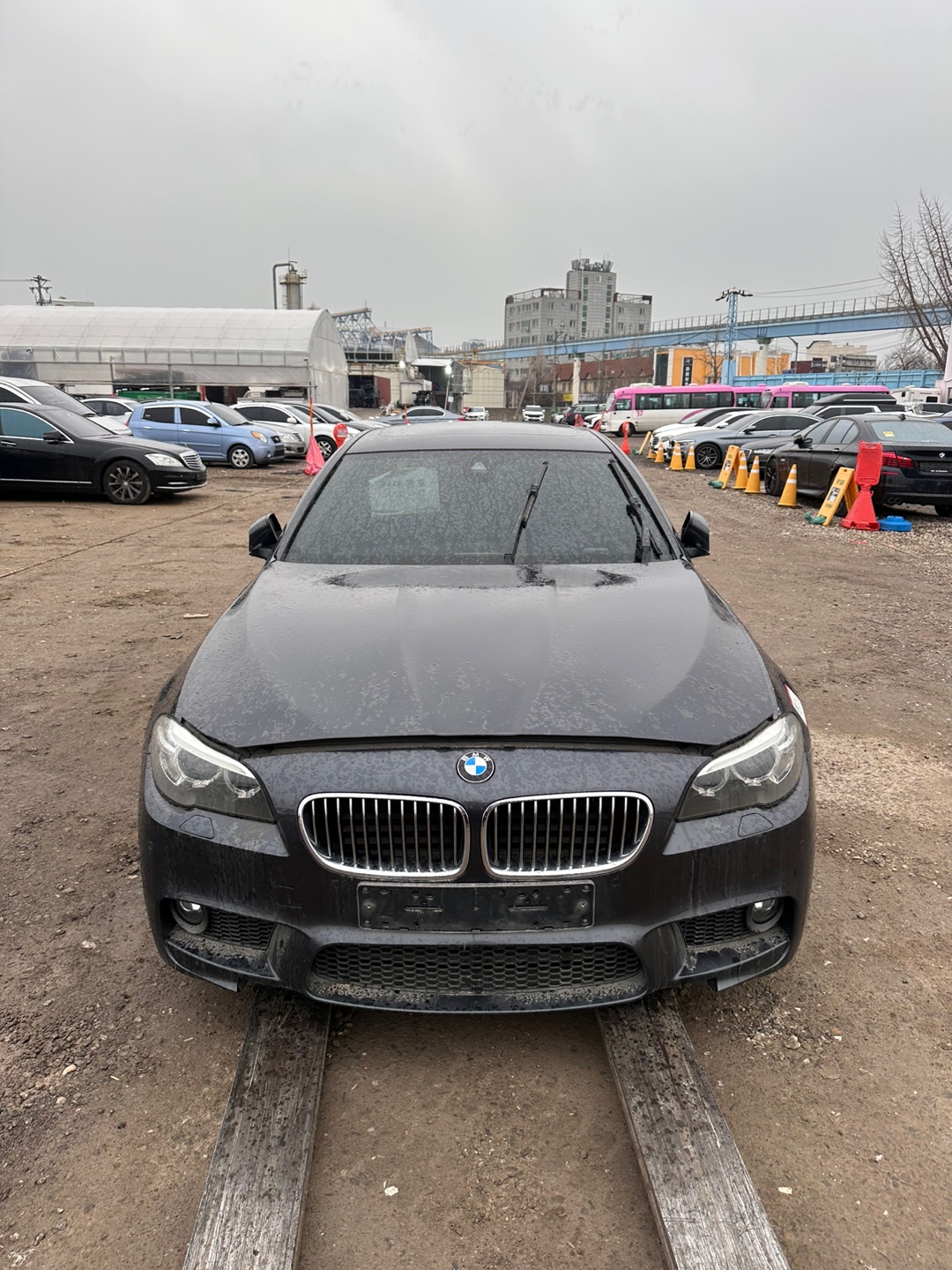
BMW 520d xDrive
2014 · 179,729 km
Enquire
 Sold9
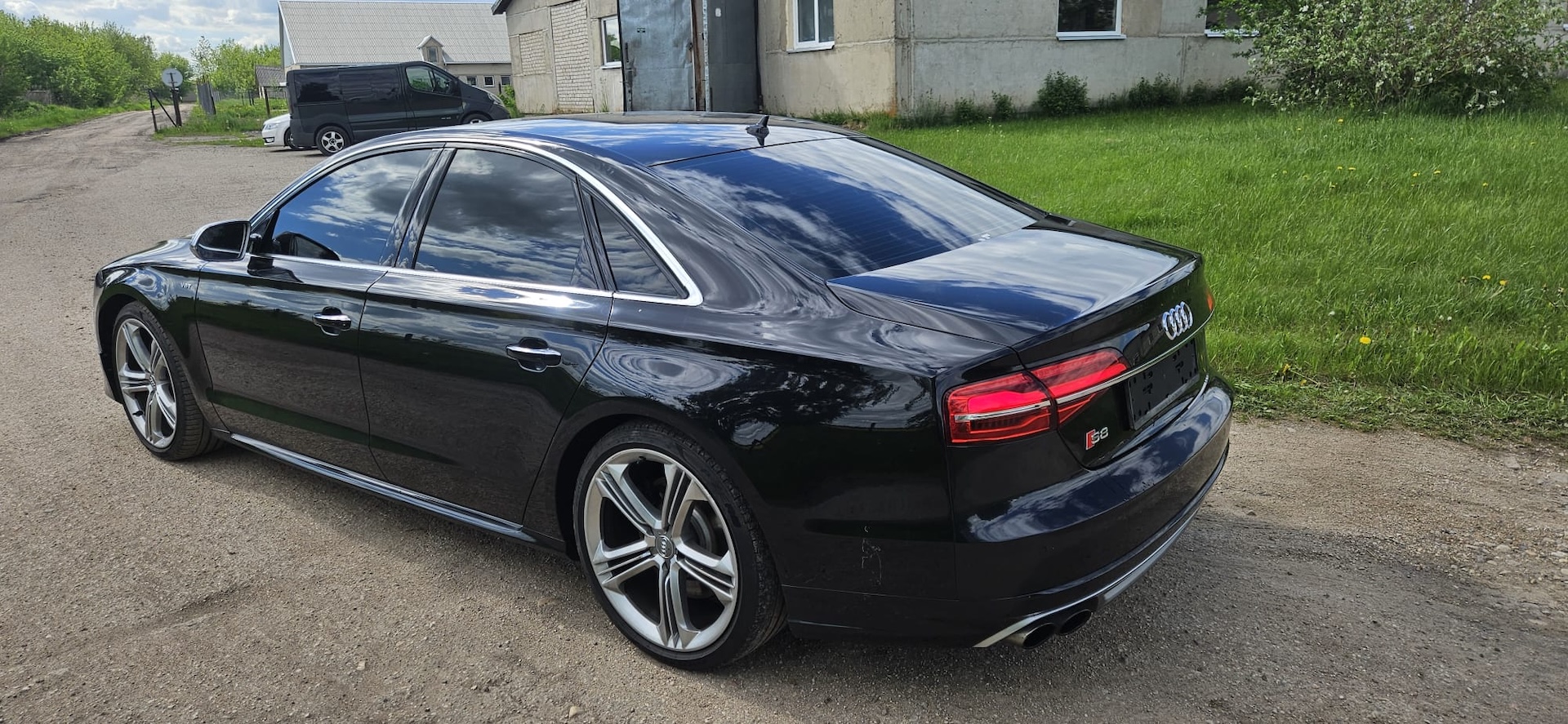
Sold9Audi S8
2015 · 232,803 km
Sold
Frequently asked questions
Can a foreigner or a private individual bid at a Korean car auction?
No. Membership at all four wholesale auction houses is limited to licensed dealerships, dealers registered under them, and licensed export companies, all of whom pay a joining deposit and annual dues. Private buyers must commission a registered member to bid for them. The same applies to insurance salvage auctions, which is why I-DRIVE-U works through a licensed export partner.
What is the difference between a Korean corporate car auction and a court car auction?
Corporate auction houses are wholesale markets using an auction mechanism to sell ordinary trade inventory, mostly ex-fleet cars with standardised inspection reports. Court auctions (경매) dispose of collateral in debt-recovery proceedings, and public sales (공매) dispose of tax-seized or state assets. Different legal basis, different stock, different risk profile.
What do the letters and numbers on a Korean auction sheet mean?
The grade is two characters: the first covers structural/frame condition, the second covers exterior panel condition. Glovis uses letters A–F for structure and numbers 9–1 for exterior; Lotte and AutoHub use letters A–F for both. The scales are house-specific and not directly interchangeable.
Are Korean auction cars accident-damaged?
Wholesale-tier cars are generally not. They are predominantly ex-rental, corporate and public-institution fleet vehicles, typically around three years old at Lotte, with regular maintenance histories. Accident-damaged and total-loss vehicles are sold separately, through the insurance salvage tier, to licensed dismantlers and exporters. That is the tier we buy from, which is why every listing on our site carries the insurer's damage information and a repair-estimate calculator.
How often do Korean car auctions run?
Weekly and on fixed days: Lotte on Monday, Glovis Tuesday through Friday across its four sites, AutoHub on Wednesday, Kcar on Thursday. Lot lists publish at 7pm the night before, except Lotte's Monday sale, which publishes Saturday at 11am.
How fast is the bidding?
Very. Lots appear on screen and members bid by button; if no one bids for three seconds, the lot is sold. A session can move up to 1,500 vehicles.
Ready to choose?
Today's insurance-auction offers refresh every hour. BMW, Mercedes-Benz and performance models have their own pages.
BMW from Korea · Mercedes-Benz from Korea · Performance models · FAQ · +370 610 13331
Auction house schedules and codes change. This information was compiled in September 2026 from the auction houses' public sources and the practice of our partners in Korea.